
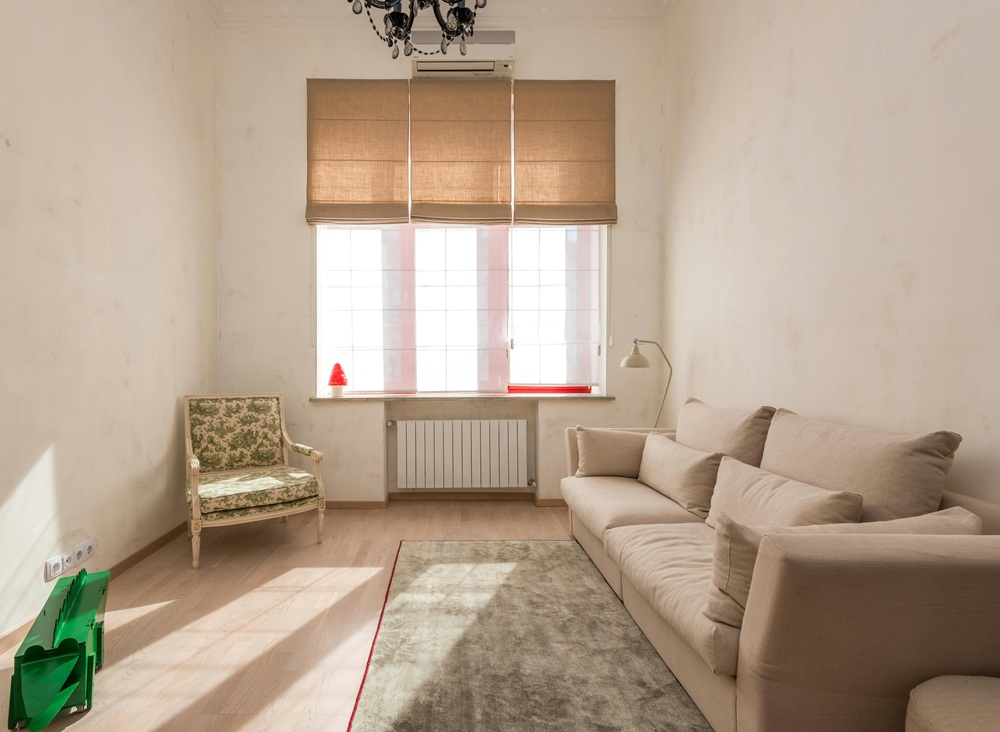
What Are the Different Types of Roman Blinds?
Walk into any beautifully styled Melbourne home and chances are, Roman blinds are doing some of the heavy lifting. They sit somewhere between the casual ease of a roller blind and the drama of a floor-length curtain — structured enough to look intentional, soft enough to feel warm. If you’ve been considering Roman blinds in Melbourne for your next renovation or refresh, the first decision you’ll face isn’t fabric or colour — it’s style. And there are more varieties than most people realise, each one suited to a different mood, room, and way of living.
This guide breaks down every major Roman blind style in plain language, explains what makes each one work, and helps you figure out which one belongs in your home.
Flat Roman Blinds
The flat Roman is the purist’s choice. When lowered, the fabric lies completely smooth without a fold, pleat, or crease in sight. It’s as close to a framed artwork as a window covering can get. When raised, it stacks into neat horizontal layers that sit tidily above the window opening.
Because there’s no structural detail competing for attention, the fabric does all the talking. Bold geometric prints, rich jewel tones, and large-scale patterns all reach their full potential on a flat Roman. If you’ve ever found a fabric you love and thought, ‘I need to show this off,’ this is the style to put it in.
They’re also the most versatile of the Roman family — at home in a sleek modern kitchen, a Scandi-inspired study, or a minimalist bedroom where clutter is the enemy.
Best for: Feature windows, modern interiors, statement fabrics
Relaxed Roman Blinds
If the flat Roman is architecture, the relaxed Roman is poetry. Instead of a straight hem, the base of a relaxed Roman forms a soft, natural curve — a gentle swoop that gives the window an effortless, lived-in elegance. When raised, the fabric gathers in loose, casual waves rather than tight horizontal folds.
This style doesn’t try to be perfect, and that’s precisely its appeal. It suits spaces where you want warmth without formality — a reading nook with afternoon light, a guest room that feels genuinely welcoming, or a French door where a heavy curtain would feel out of proportion.
In Melbourne homes, relaxed Romans are particularly popular in heritage and period properties where the style’s soft sensibility complements ornate architraves and high ceilings without competing with them.
Best for: Bedrooms, reading rooms, period-style homes, French doors
Hobbled (Cascade) Roman Blinds
The hobbled Roman — also called a cascade or soft fold — is the most textured and visually layered of the classic styles. Unlike a flat Roman that smooths out when lowered, a hobbled blind retains its soft overlapping folds at all times. The fabric loops forward in a series of cascading arcs, creating permanent depth and movement even when the blind is fully down.
It’s an inherently luxurious look — one that photographs beautifully and tends to elevate a room’s perceived quality significantly. Heavier fabrics like velvet, linen, or thick weaves suit this style especially well, as their weight gives the folds substance and definition.
One practical consideration: because the folds are always present, hobbled Romans don’t stack as compactly as flat styles. For windows where you want to maximise the view when the blind is up, this is worth factoring into your decision.
Best for: Formal living rooms, master bedrooms, spaces where texture drives the design
“A Roman blind doesn’t just cover a window — it frames it. The style you choose shapes the entire mood of the room around it.”
Pleated or Structured Roman Blinds
Pleated Romans sit between the informality of a relaxed blind and the crispness of a flat one. Stitched rods or dowels sewn into the lining create defined fold lines, so when the blind is raised, every layer sits at the same depth and width — disciplined and orderly, with just enough detail to avoid looking stark.
They’re particularly suited to busy households where the blind goes up and down multiple times a day, as the stitched structure ensures the folds always re-form in the same place. In dining rooms, home offices, and children’s study spaces — areas that need to look tidy with minimal effort — a pleated Roman delivers consistency without fuss.
Best for: Home offices, dining rooms, family-use spaces
Sheer Roman Blinds
Sheer Romans are for the light-lovers. Made from translucent or semi-sheer fabrics, they diffuse incoming sunlight into a soft, glowing wash that fills a room without the harshness of direct sun or the darkness of a blockout option. Privacy is maintained during daylight hours, though after dark the dynamic reverses — a pair of sheer Romans in a ground-floor window will need a secondary option for night-time use.
In open-plan living areas, north-facing rooms, or any space where natural light is a design asset, sheer Romans are often the ideal answer. They keep a room feeling airy and connected to the outside world while eliminating uncomfortable glare on screens and seating.
Layered beneath a heavier blockout or lining, they also create a highly functional dual system — sheer during the day, private at night — without needing a separate blind.
Best for: Living rooms, north-facing windows, open-plan spaces, layered window treatments
Blackout Roman Blinds
A blackout Roman combines the elegance of the Roman style with a lining engineered to prevent virtually all light from entering the room. The lining — typically a dense, coated fabric — is bonded to the reverse of the decorative face fabric so that from the street, the blind looks exactly like any other Roman. Only you know what it’s doing on the inside.
For Melbourne households with young children, shift workers, or anyone whose sleep is disrupted by early summer mornings — in a city that sees daylight well before 6am at peak summer — blackout Romans are genuinely life-improving. They’re equally valued in media rooms and home theatres where ambient light control matters for picture quality.
Any of the structural styles — flat, pleated, relaxed, or hobbled — can be specified with a blackout lining, so choosing this option doesn’t mean sacrificing your preferred Roman style.
Best for: Bedrooms, children’s rooms, media rooms, shift workers
Motorised Roman Blinds
Motorisation can be applied to almost any Roman blind — but it changes the experience of owning them significantly enough to deserve its own mention. A motorised Roman is operated by a remote, wall switch, or smartphone app rather than a cord or chain. For large windows, high-set windows, or simply anyone who finds routine adjustments a frustration, the convenience is immediately noticeable.
In Melbourne’s newer builds and renovated properties, motorised blinds are increasingly integrated into broader home automation systems — waking up with the blinds rising automatically, or closing across the entire house at sunset with a single tap. Compatible systems work with Google Home, Amazon Alexa, and Apple HomeKit.
There’s also a safety benefit that’s particularly relevant for families: motorised Romans are cordless, eliminating the looping or dangling cords that present a hazard to young children and pets.
Best for: Large or high windows, smart homes, family safety, multi-room installations
Natural Fibre & Woven Roman Blinds
Not every Roman blind needs to be woven from conventional upholstery fabric. Natural fibre options — linen, jute, bamboo, grasscloth, and textured cotton blends — bring a completely different sensibility to the window. They’re less about pattern and more about material: the way light plays through woven fibres, the organic variation in texture, the earthy warmth of a natural colour palette.
In Melbourne’s coastal fringe suburbs — from Williamstown through to Frankston — this style is enormously popular in homes where the interior is deliberately connected to a natural or landscape context. They also suit urban homes pursuing a biophilic interior direction, where raw materials and textures ground a space that might otherwise feel too polished.
Woven natural fibres offer light filtering rather than blockout — they reduce direct sun but don’t eliminate it. For rooms where light control is paramount, they pair well with a secondary sheer or can be specified with a light-filtering lining.
Best for: Coastal homes, biophilic interiors, earthy or organic styling
How to Choose the Right Roman Blind Style
With eight distinct styles on the table, narrowing down the right one comes down to four practical questions. Answer these and the choice usually becomes straightforward.
- How much light do you need to control? If darkness matters — for sleep, for screens, for privacy after dark — a blackout lining is non-negotiable, regardless of which structural style you prefer.
- How often will the blind move? For windows you raise and lower multiple times daily, a flat or pleated style stacks more compactly and re-folds more predictably than a hobbled or relaxed design.
- What’s the dominant feeling of the room? Crisp and modern calls for flat Romans. Soft and layered calls for hobbled or relaxed. Casual and beachy calls for natural fibre. Let the room’s existing character guide the choice.
- What fabric have you fallen in love with? Large patterns show best on flat Romans. Solid tones in heavy fabrics bring hobbled styles to life. Sheers are their own category. If you start with the fabric, the style often follows naturally.
Ready to Find Your Perfect Roman Blind?
At New World of Blinds, we’ve been helping Melbourne homeowners find the right blinds in Melbourne since 2005 — custom-made at our Campbellfield facility, measured and installed by our own team. Every Roman blind we supply is made to your exact window dimensions, in the fabric, style, lining, and operation type that suits your home and your life.
We offer a completely free, no-obligation in-home measure and quote across all Melbourne suburbs. One of our consultants will visit your home, bring fabric samples, walk you through every style option in person, and provide a written quote before you commit to anything. Call us today at 0422 786 077.
Frequently Asked Questions
Flat and pleated Romans are the most practical for frequent use — they stack cleanly and re-fold consistently without much adjustment needed.
Yes — a blackout lining can be added to virtually any Roman blind style, whether flat, relaxed, hobbled, or pleated.
Some fabrics handle humidity better than others — moisture-resistant or synthetic blends are the best choice for bathrooms; we can guide you to suitable options during your consultation.
Most custom orders are manufactured and installed within 2–3 weeks of confirming your order, with priority options available for urgent timelines.
Yes — New World of Blinds services all Melbourne metropolitan suburbs from our Campbellfield base, from the northern growth corridor through to the inner east and western suburbs.